A water stain on the ceiling presents a fork in the road: call a roofer or call a plumber? Choose wrong and you pay for the wrong repair while the real leak continues. The good news is that roof and plumbing leaks leave different evidence — if you know what to look for.
Here's how to read the clues, run simple tests, and get the right specialist on the job the first time.
Clue 1: Timing relative to rain
The single most useful clue. If the stain appears or grows after rain — especially Santa Fe's intense monsoon downpours — suspect the roof. If it appears with no rain in sight, or grows steadily regardless of weather, suspect plumbing. Keep a simple log: date, weather, stain changes.
Clue 2: The stain's appearance
Roof leaks often produce irregular, spreading stains with tide marks from repeated wetting and drying. Plumbing leaks tend toward more consistent dampness, sometimes with a defined drip point. Neither is definitive alone — but combined with timing, patterns emerge.
Clue 3: What's above the stain
Look at what's directly overhead. Bathroom or kitchen above? Plumbing is the prime suspect. Attic or roof deck above? Start with the roof. On Santa Fe's flat roofs, remember water travels along decking — the entry can be feet from the stain.
Clue 4: The attic test
If you have attic access, look during or right after rain: active dripping, wet decking, or daylight through the roof point to roofing. Dry decking with a stain below points to plumbing in the ceiling assembly.
Clue 5: The water meter test
Shut off all water and watch the meter. If it moves, you have a pressurized plumbing leak somewhere — and the ceiling stain is a candidate. If it holds steady, plumbing is less likely (though drain leaks don't show on the meter).
When it's neither — or both
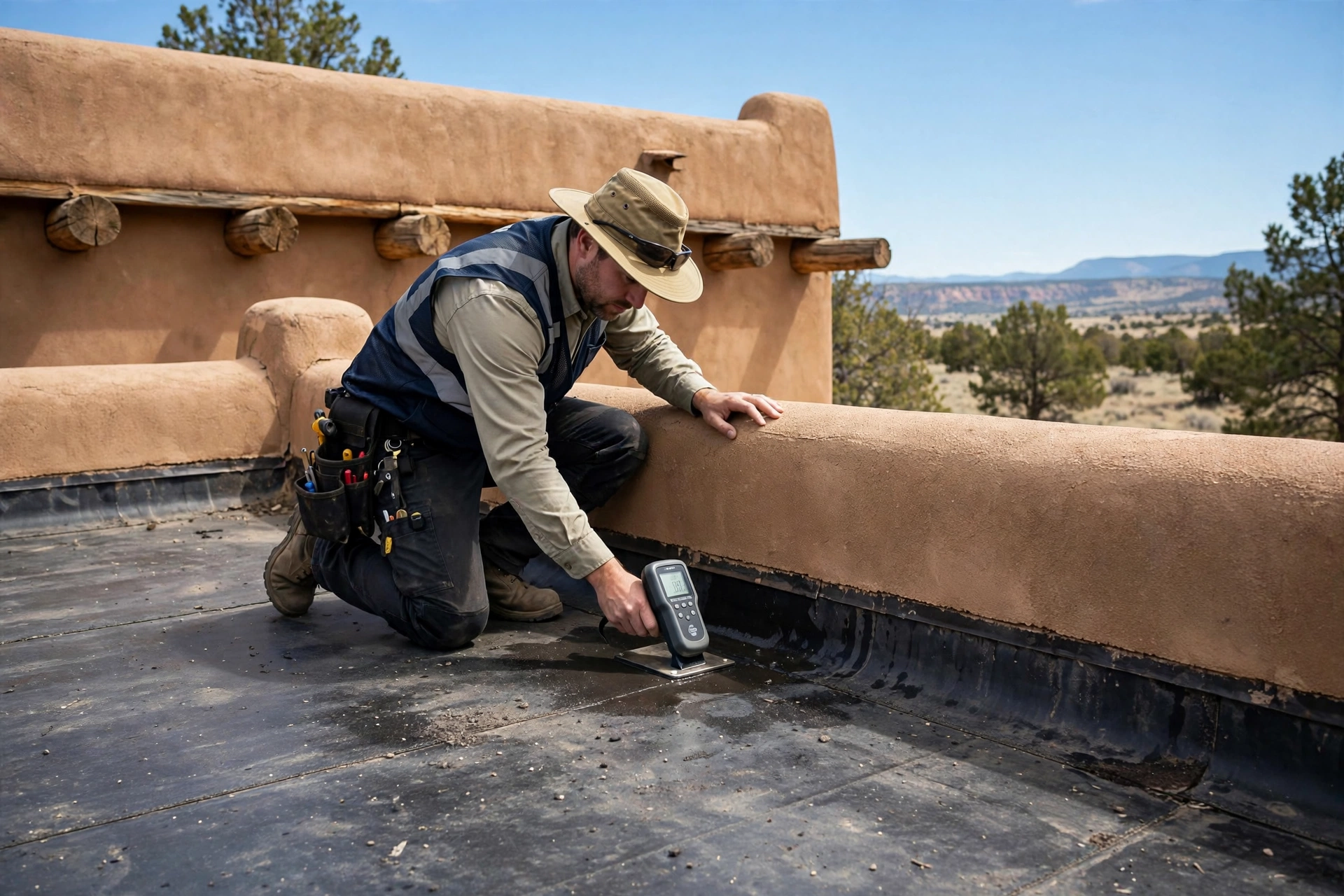
Condensation from poor ventilation can mimic leaks, and it's possible to have a roof issue and a plumbing issue simultaneously. Professionals distinguish them with moisture meters and thermal imaging: active rain-driven intrusion looks different from pressurized pipe leakage.
Getting the right diagnosis
Roof leak detection uses infrared scans and controlled water testing to find the entry point; plumbing detection uses acoustic, thermal, and pressure methods. A proper diagnostic identifies which system failed before anyone starts repairing — saving you from paying a roofer for a plumber's problem, or vice versa.
Common Questions
How do you tell if a ceiling stain is from the roof or plumbing?
Check timing vs. rain, look at what's above the stain, inspect the attic during rain, and run the water meter test. Roof leaks correlate with weather; plumbing leaks don't.
Does a roof leak stain grow after rain?
Typically yes — roof-driven stains expand after rain events and may partially dry between them, often leaving tide marks. Steady growth regardless of weather suggests plumbing.
What does a plumbing leak stain look like?
Often a more defined, consistently damp area — sometimes with an active drip point. But appearances overlap enough that testing (meter test, moisture meters) beats visual guessing.
Should I check the attic first?
If you have safe attic access, yes — it's the fastest differentiator. Active wetness on roof decking during rain means roof; dry decking with a stained ceiling below means look at plumbing.
Can condensation cause ceiling stains?
Yes — poor attic ventilation can condense moisture that mimics a leak. Professionals distinguish it with moisture patterns and humidity readings; the fix (ventilation) is completely different from leak repair.
Suspect a Leak? Don't Guess — Detect.
Every day a hidden leak runs costs you water and risks damage. Call now for professional, non-invasive leak detection in Santa Fe, NM — open 24/7.