Hydronic Radiant Heating Leak Detection in Santa Fe, NM
Radiant floor heating is beloved in Santa Fe — until a loop starts losing pressure. We isolate the failing circuit and pinpoint the leak under your floors without destructive searching.
Understanding Hydronic Radiant Heating Leak Detection in Santa Fe
Hydronic radiant floors circulate warm water through tubing embedded in your slab or underfloor — silent, comfortable heat that Santa Fe homeowners prize. But that tubing is inaccessible: when a joint weeps or a tube is damaged, the symptoms are indirect — the boiler needs frequent top-ups, one zone runs cold, or damp spots appear.
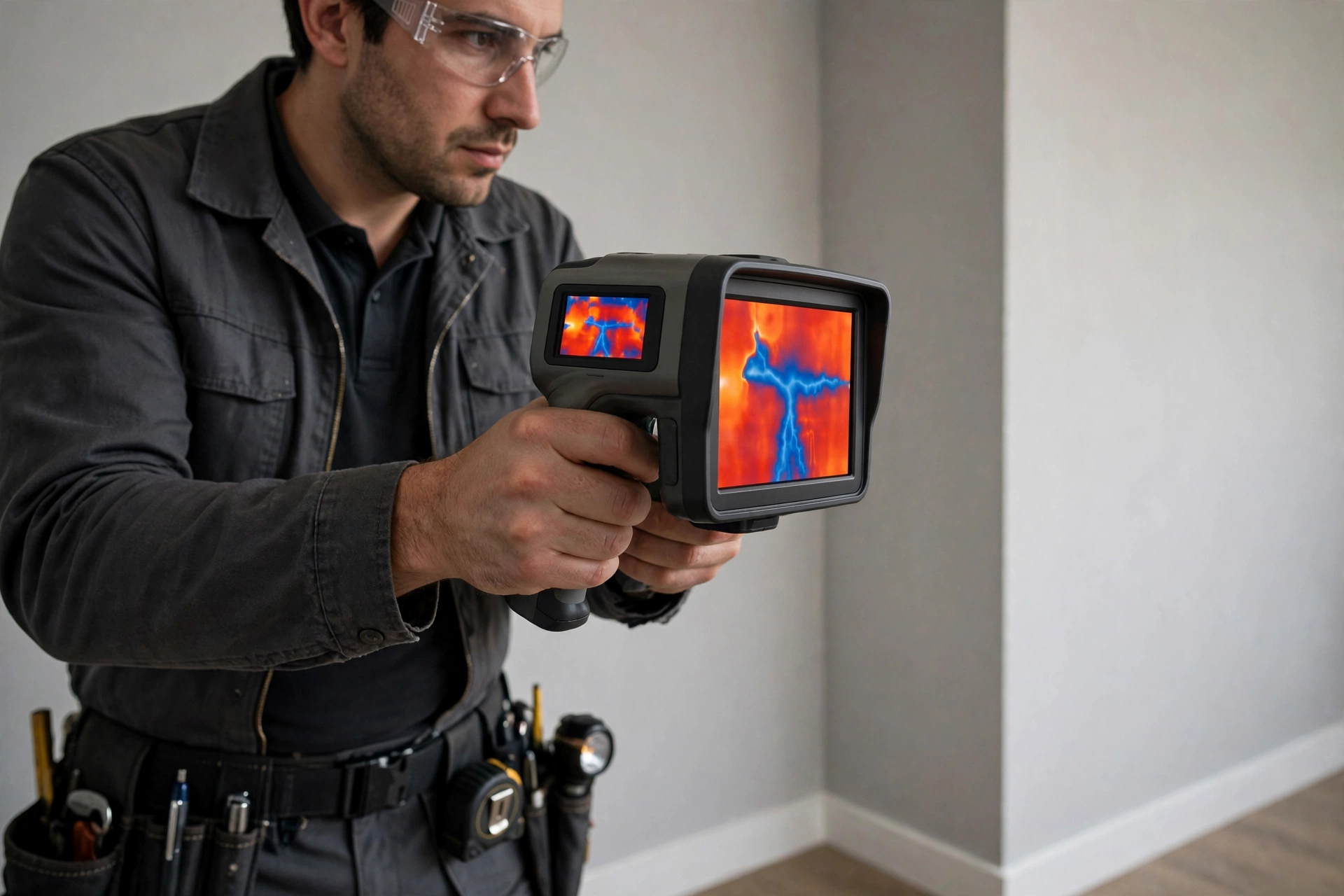
Radiant heating leak detection is a specialized diagnostic. We pressure-test the system, isolate individual loops at the manifold to identify the failing circuit, then use thermal imaging and acoustic methods to pinpoint the leak's position under the floor. The result: your heating contractor opens one targeted area instead of the whole floor.
Signs You May Need Hydronic Radiant Heating Leak Detection
If any of these sound familiar, don't wait — hidden problems compound daily.
Boiler pressure keeps dropping
Needing to top up the system frequently with no visible leak means water is escaping somewhere in the loops.
One zone runs cold
A zone that won't heat properly may have lost enough water to air-lock or underperform.
Unusual warm spots on the floor
A leak in a hot supply tube can create a localized hot patch — or, paradoxically, cold spots where flow is lost.
Damp areas or warped flooring
Moisture wicking up around the leak damages wood floors and finishes.
Higher heating bills
The boiler works harder to heat a system that keeps losing hot water.
Hissing or bubbling sounds
Air entering through a leak point can cause gurgling in the manifold or tubing.
What Causes It
- Fitting failures at manifolds and connections
- Tubing damage from fasteners or renovation work
- Thermal stress and floor movement over years
- Corrosion on metal components and older tubing
- Freeze damage in unconditioned spaces
Our Hydronic Radiant Heating Leak Detection Process
Thorough, transparent, and built around one visit that answers everything.
System pressure test
We pressurize the hydronic system and monitor the drop rate to confirm a leak versus normal minor loss.
Loop isolation at the manifold
Each heating circuit is valved off and tested individually — identifying exactly which loop leaks.
Thermal imaging scan
With the system warm, an infrared camera maps the tubing layout and reveals anomalies at the leak point.
Acoustic confirmation
Listening equipment confirms the precise position under the floor.
Mark & report
The leak is marked on the floor surface and documented for your heating contractor's targeted repair.
Technology We Use for Hydronic Radiant Heating Leak Detection
Professional-grade methods — matched to your situation.
Thermal / infrared imaging
The premier tool for radiant leaks — warm water in tubing creates a mappable heat signature; the leak disrupts the pattern.
Manifold loop isolation
Valving each circuit separately turns a whole-house mystery into one identified loop.
Hydrostatic pressure testing
Quantifies the leak rate per loop and verifies the repair held.
Acoustic listening
Confirms the pinpoint by hearing pressurized water escaping at the break.
Benefits of Professional Hydronic Radiant Heating Leak Detection
Finding it fast — and precisely — changes everything about what happens next.
No floor-wide demolition
The failing loop — and the leak point within it — is identified before any floor is opened.
Protect expensive finishes
Santa Fe radiant floors often sit under tile, stone, or hardwood. Precision keeps the repair area tiny.
Restore even heating
Finding and fixing the leak returns every zone to full, even warmth.
Verify the fix
Post-repair pressure testing proves the system holds before floors are closed back up.
Property Types We Serve
Hydronic Radiant Heating Leak Detection — FAQs
What are the signs of a radiant floor heating leak?
The boiler losing pressure and needing frequent top-ups is the top sign. Others include cold zones, unusual warm or damp spots on floors, warped flooring, higher heating bills, and gurgling sounds at the manifold.
How do you find a leak in radiant floor heating?
We pressure-test the system, isolate each loop at the manifold to find the failing circuit, then use thermal imaging to see the tubing layout and the anomaly, confirmed by acoustic listening. The leak is marked on the floor surface.
Can a radiant heating leak be fixed without tearing up the floor?
The floor is only opened at the pinpointed spot — typically a small, targeted access — rather than demolished to search. Detection is what makes the repair small.
Is it safe to keep running the system with a suspected leak?
Short-term, low-fire operation is usually tolerable, but continued operation wastes water and energy and risks floor damage from moisture. It is better to diagnose promptly — and never ignore a rapidly dropping boiler pressure.
What causes hydronic radiant leaks?
Most often fitting failures at manifolds, tubing nicked by fasteners during construction or renovation, thermal cycling stress over years, and in Santa Fe, freeze damage in unconditioned spaces.
How long does radiant leak detection take?
Most residential jobs are completed in a single visit: pressure testing and loop isolation first, then thermal/acoustic pinpointing. Larger homes with many zones take longer.
Related Services
Thermal Imaging Leak Detection
Water changes surface temperature — hot leaks warm it, cold leaks cool it through evaporation. An infrared cam…
Learn more →🏭Boiler & Chiller Leak Diagnostics
A boiler that needs constant top-ups or a chiller that's losing its cool has a leak somewhere in the plant. We…
Learn more →🎧Acoustic Pipe Leak Detection
Pressurized water escaping a pipe makes a distinct vibration — inaudible to you, crystal clear to our sensors.…
Learn more →💧Electronic Moisture Mapping
A visible stain is only the edge of the moisture. Electronic moisture mapping measures and documents the full …
Learn more →Suspect a hydronic radiant heating leak detection issue in Santa Fe?
Don't wait until a small leak becomes a big repair. Call now — we answer 24/7 and pinpoint it without tearing your property apart.