Slab Leak Detection in Santa Fe, NM
A leak under your concrete slab can waste thousands of gallons and undermine your foundation for months before it surfaces. We find its exact location — usually within inches — without jackhammering your floors to search for it.
Understanding Slab Leak Detection in Santa Fe
Many Santa Fe homes sit on concrete slab foundations with water lines running directly beneath them. When one of those lines develops a pinhole or crack, there is no basement or crawl space to reveal it — the water simply saturates the soil under your home while your water bill climbs and your floors quietly suffer.
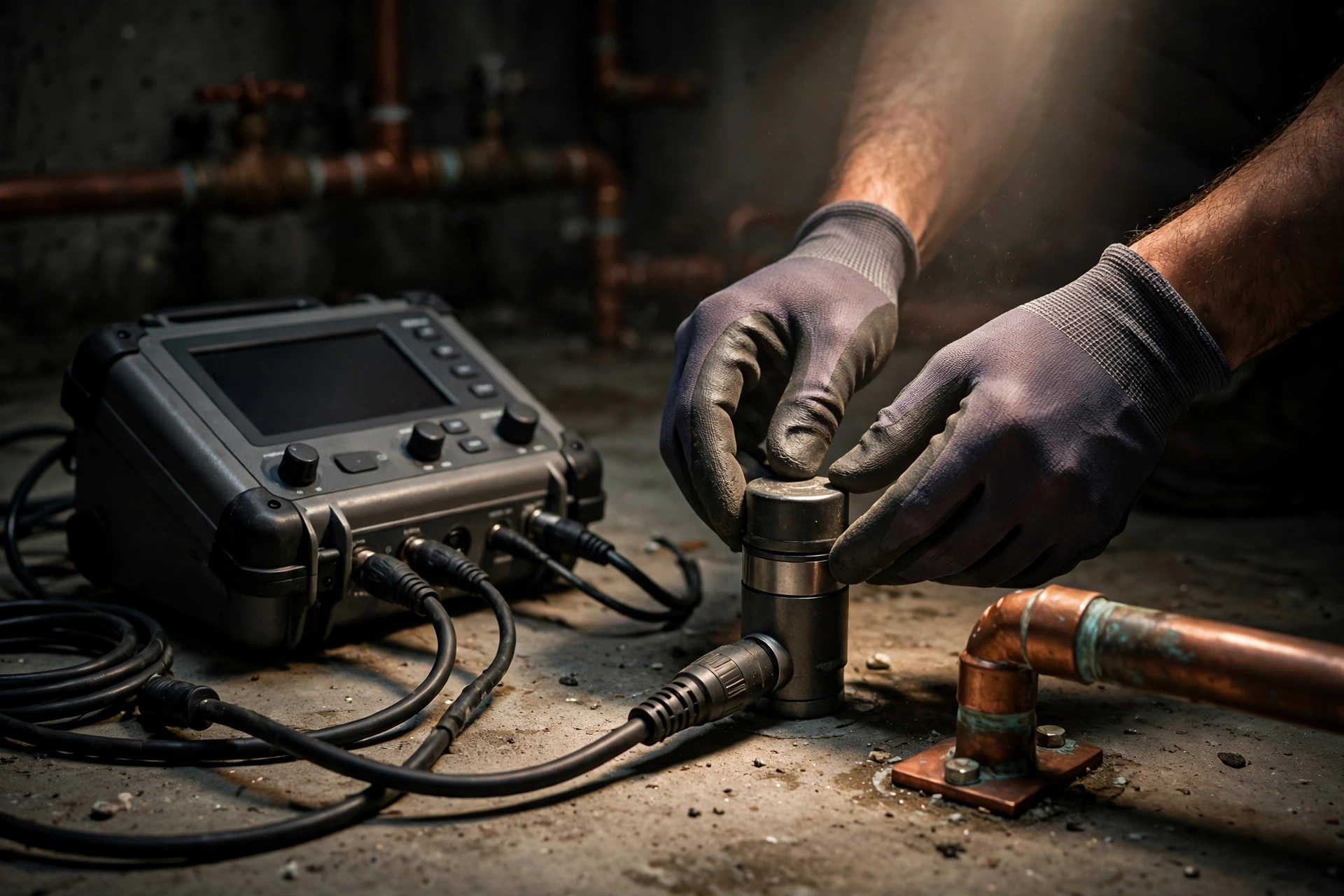
Slab leak detection is the process of locating that break precisely from above the slab. Our technicians combine acoustic listening, thermal imaging, and isolated pressure testing to triangulate the leak's position, then mark one exact spot for your repair contractor. No exploratory holes, no trenched floors, no guessing.
Signs You May Need Slab Leak Detection
If any of these sound familiar, don't wait — hidden problems compound daily.
Your water bill suddenly spikes
A slab leak runs 24 hours a day. If your City of Santa Fe water bill jumps with no change in usage, a pressurized line under the slab is a prime suspect.
You hear running water with everything off
Stand quietly near the floor. A faint hiss or rush when no fixture is running often means pressurized water escaping under the concrete.
Warm or hot spots on the floor
A hot-water line leaking under the slab heats the concrete above it. Walk barefoot — an unexplained warm patch is a classic slab-leak tell.
Damp carpet, buckling wood, or lifting tile
Moisture wicking up through the slab damages flooring from below. Edges that curl or tiles that loosen in one area deserve investigation.
Your water meter moves with fixtures off
Shut off every tap and watch the meter's leak indicator. Movement means water is going somewhere — often under the slab.
Cracks, musty odors, or mold
Shifting soil from long-term saturation can crack walls and floors. Persistent mustiness near floor level suggests hidden moisture.
What Causes It
- Aging copper lines corroded by Santa Fe's hard water
- Foundation and soil movement stressing pipe joints
- High water pressure hammering fittings over time
- Abrasion where pipes rub against concrete or rebar
- Poor original installation or kinked lines
Our Slab Leak Detection Process
Thorough, transparent, and built around one visit that answers everything.
Symptom review & meter test
We start with your observations and a water-meter test to confirm a pressurized leak exists — and whether it is on the hot or cold side.
Acoustic survey
Ground microphones and listening equipment scan the slab for the vibration signature of escaping water, narrowing the search area.
Thermal imaging pass
An infrared camera maps temperature anomalies across the floor — hot-water leaks glow as warm trails under the surface.
Isolation pressure testing
We isolate individual lines and pressure-test each one to prove exactly which line is losing water and how fast.
Mark & report
The confirmed location is marked on the floor within inches, and you receive a written report with findings and photos for your plumber or insurer.
Technology We Use for Slab Leak Detection
Professional-grade methods — matched to your situation.
Acoustic listening devices
Sensitive ground microphones hear pressurized leaks through concrete and soil, tracing the sound to its loudest point.
Thermal / infrared imaging
Detects the heat signature of hot-water leaks and the evaporative cooling of cold-water leaks — no contact with pipes needed.
Pressure & isolation testing
Proves which line leaks by testing sections independently, eliminating guesswork before anyone cuts concrete.
Electronic line tracing
Maps the buried pipe route so the marked leak location lines up with the actual line, not a guess.
Benefits of Professional Slab Leak Detection
Finding it fast — and precisely — changes everything about what happens next.
No exploratory demolition
We locate the leak before any concrete is cut — your repair contractor opens one small, precise area instead of trenching the floor.
Catch it before foundation damage
Long-term saturation can heave or settle a slab. Early pinpointing keeps a plumbing problem from becoming a structural one.
Documentation for insurance
You get a written report with the leak location and evidence photos — exactly what insurers and contractors ask for.
Lower water bills, fast
A slab leak can waste hundreds of gallons a day. Finding it quickly stops the meter — and the bill — from spinning.
Property Types We Serve
Slab Leak Detection — FAQs
What are the signs of a slab leak?
The most common signs are a sudden water-bill spike, the sound of running water with fixtures off, warm spots on the floor, damp or buckling flooring, a spinning water meter, and musty odors near floor level. Any one of these warrants a professional check.
How do plumbers detect leaks under a slab?
Professionals combine acoustic listening (microphones that hear escaping water through concrete), thermal imaging (heat signatures of hot-water leaks), and isolated pressure testing of individual lines. Together these methods triangulate the leak within inches — no exploratory demolition needed.
How much does slab leak detection cost in Santa Fe?
Industry sources commonly cite typical ranges around $150–$600 for professional leak detection visits, with the method and access affecting where a job falls. Slab work involving multiple methods trends toward the higher end. Call for a quote based on your symptoms — it costs nothing to describe what you are seeing.
Can you find a slab leak without tearing up my floors?
Yes — that is the entire point of professional detection. Acoustic, thermal, and pressure-testing methods locate the leak from above the slab. Concrete is only opened once, at the marked spot, by your repair contractor.
What causes slab leaks?
In Santa Fe the usual culprits are aging copper lines corroded by hard water, soil movement stressing joints, high water pressure, and abrasion where pipes contact concrete. Older homes with original plumbing are the most susceptible.
What should I do first if I suspect a slab leak?
Do the meter test: shut off all water, watch the meter's leak indicator for 15–30 minutes. If it moves, shut off the main valve to stop the damage, document everything with photos for insurance, and call a detection specialist before anyone starts breaking concrete.
Related Services
Acoustic Pipe Leak Detection
Pressurized water escaping a pipe makes a distinct vibration — inaudible to you, crystal clear to our sensors.…
Learn more →🌡️Thermal Imaging Leak Detection
Water changes surface temperature — hot leaks warm it, cold leaks cool it through evaporation. An infrared cam…
Learn more →🧪Hydrostatic Pressure Testing
When a drain line under your slab is suspect, you need a definitive answer before committing to repair. Hydros…
Learn more →🕳️Underground Water Line Leak Detection
A buried supply line can leak thousands of gallons into the soil with nothing visible on the surface. We trace…
Learn more →Suspect a slab leak detection issue in Santa Fe?
Don't wait until a small leak becomes a big repair. Call now — we answer 24/7 and pinpoint it without tearing your property apart.