Hydrostatic Pressure Testing in Santa Fe, NM
When a drain line under your slab is suspect, you need a definitive answer before committing to repair. Hydrostatic testing proves whether the line holds water — yes or no, documented.
Understanding Hydrostatic Pressure Testing in Santa Fe
Hydrostatic pressure testing is the definitive test for drain and sewer line integrity under slabs. An inflatable test ball seals the line, the system is filled with water to a measured level, and the level is monitored: if it holds, the line is sound; if it drops, there is a break — and the drop rate indicates its severity.
In Santa Fe, this test answers the stressful question of under-slab drain leaks without any excavation. It is commonly used when sewer odors, damp flooring, or foundation cracks suggest a drain failure, and as a verification step before real-estate transactions on older homes with cast-iron drain lines. Note: hydrostatic testing evaluates drain/sewer lines; pressurized supply lines are tested by isolation pressure testing instead.
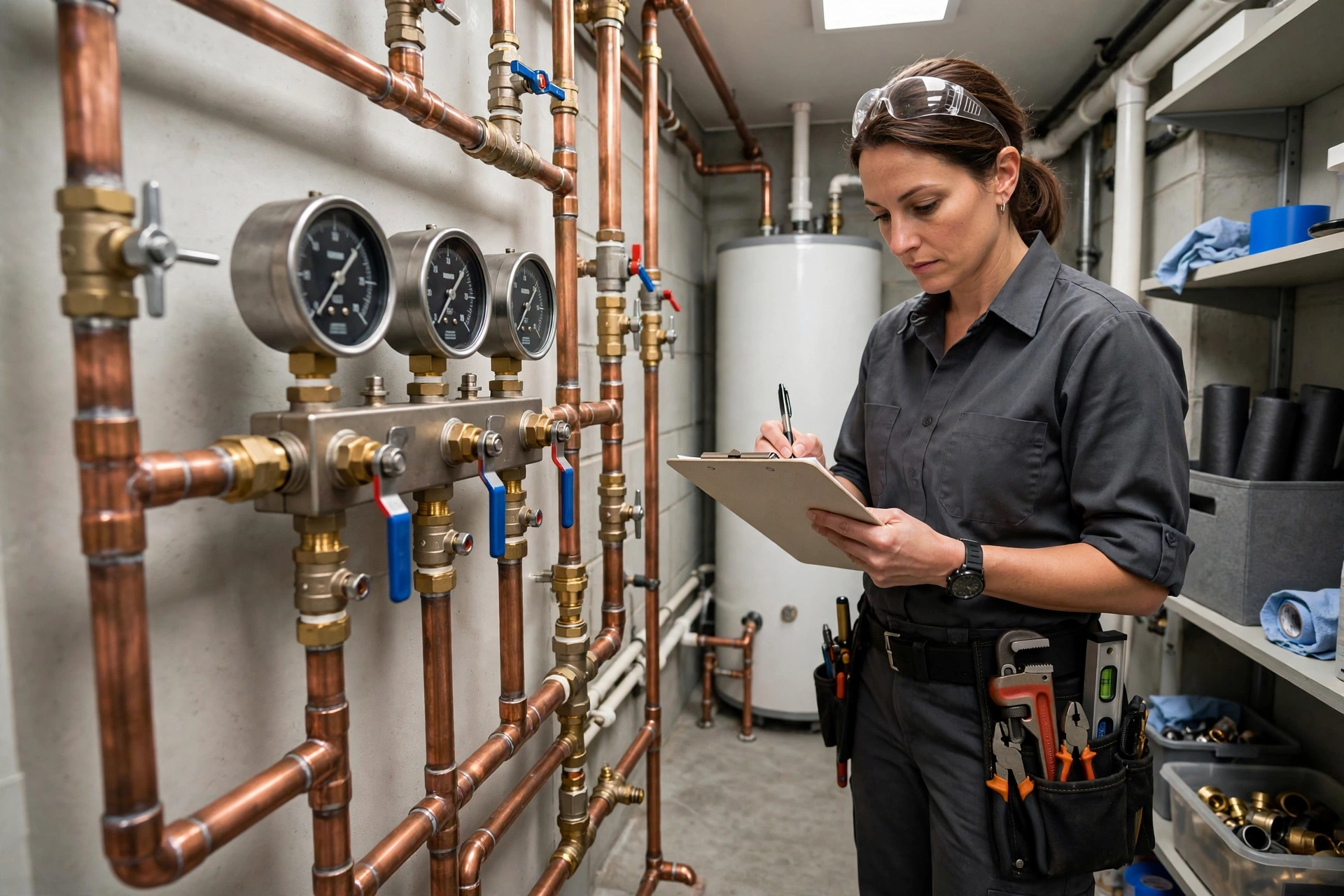
Signs You May Need Hydrostatic Pressure Testing
If any of these sound familiar, don't wait — hidden problems compound daily.
Sewer odors inside the home
Persistent rotten-egg smells can mean a cracked drain line venting gas under the slab.
Damp flooring with no supply leak
If supply lines test clean but floors stay damp, the drain side is suspect.
Foundation cracks near drain runs
Long-term drain leakage erodes soil support under the slab.
Slow drains plus suspected damage
When snaking doesn't resolve issues and the line is old, integrity testing is the next step.
Pre-purchase on older homes
Cast-iron drain lines under slabs are a known risk — testing before closing is cheap insurance.
Our Hydrostatic Pressure Testing Process
Thorough, transparent, and built around one visit that answers everything.
System assessment
We review the drain layout, symptoms, and history to design the right test configuration.
Test ball placement
An inflatable ball seals the line at the appropriate point, isolating the section under test.
Fill & stabilize
The isolated section is filled with water to a marked level and allowed to stabilize.
Monitored hold period
The water level is monitored over a set period — holding steady means integrity; dropping means a break.
Documented result
You receive a written yes/no result with the loss rate, which determines the repair urgency and approach.
Technology We Use for Hydrostatic Pressure Testing
Professional-grade methods — matched to your situation.
Inflatable test balls
Seal drain lines at precise points to isolate exactly the section under test.
Water-level monitoring
Calibrated measurement of the test column — the drop rate quantifies the break's severity.
Isolation testing (supply side)
The complementary method for pressurized lines: sections valved off and pressure-monitored.
Camera follow-up
If the test fails, a sewer camera locates the break's exact position for targeted repair.
Benefits of Professional Hydrostatic Pressure Testing
Finding it fast — and precisely — changes everything about what happens next.
Definitive yes/no answer
No ambiguous 'maybe' — the line either holds or it doesn't, with the loss rate documented.
No excavation to diagnose
The entire test happens through existing access points — nothing is dug up to get the answer.
Right-sized repair decisions
The loss rate distinguishes a weeping joint (monitor or seal) from a broken line (replace) — preventing both under- and over-reaction.
Transaction confidence
Buyers and sellers get documented proof of drain integrity instead of negotiating over fears.
Property Types We Serve
Hydrostatic Pressure Testing — FAQs
When is a hydrostatic plumbing test necessary?
When symptoms point to a drain-line break under the slab — sewer odors, unexplained damp flooring, foundation cracking near drain runs — and you need a definitive answer before committing to excavation. It's also used as due diligence on older homes.
How does hydrostatic pressure testing work?
An inflatable test ball seals the drain line, isolating the section under test. It's filled with water to a marked level and monitored: if the level holds, the line has integrity; if it drops, there's a break, and the drop rate shows how severe.
What's the difference between hydrostatic and isolation testing?
Hydrostatic testing evaluates drain/sewer lines by filling them with water and watching the level. Isolation testing evaluates pressurized supply lines by valving off sections and monitoring pressure. Different systems, different tests — we use the right one for your pipes.
Does the test work on supply lines or only drains?
Hydrostatic testing as described here is for drain and sewer lines. Pressurized supply lines get isolation pressure testing instead — a different procedure for a different kind of pipe.
Related Services
Slab Leak Detection
A leak under your concrete slab can waste thousands of gallons and undermine your foundation for months before…
Learn more →📹Sewer & Drain Camera Inspection
Stop guessing about your drain lines. A waterproof camera travels through your sewer lateral and shows every c…
Learn more →🕳️Underground Water Line Leak Detection
A buried supply line can leak thousands of gallons into the soil with nothing visible on the surface. We trace…
Learn more →🏚️Basement Seepage & Foundation Leak Detection
Seepage only after heavy rain? Musty smells that never leave? We trace basement and foundation water to its tr…
Learn more →Suspect a hydrostatic pressure testing issue in Santa Fe?
Don't wait until a small leak becomes a big repair. Call now — we answer 24/7 and pinpoint it without tearing your property apart.