Santa Fe's intense sun and dry air evaporate pool water aggressively — which makes it genuinely hard to tell normal loss from a real leak. Pool owners waste seasons (and chemicals) assuming evaporation, while leaks quietly undermine decking and inflate water bills.
The good news: a simple bucket test gives you a definitive answer in 24 hours. Here's how to do it, what the results mean, and the signs that point to a leak even before you test.
Normal evaporation vs. leak: the numbers
In hot, dry, windy conditions, a pool can lose up to about a quarter-inch per day to evaporation. Consistently losing more than that — half an inch or more daily — almost certainly means a leak. Track it for a few days; patterns beat single readings.
The bucket test: step by step
Place a bucket on a pool step so it's stable with water around it. Fill the bucket to match the pool's water level. Mark both levels (tape works well). Run the pump normally for 24 hours. Then compare: if both dropped equally, it's evaporation. If the pool dropped more than the bucket, you have a leak.
Interpreting the results
Equal drop = evaporation; top off and stop worrying. Pool dropped more = leak confirmed. For extra precision, run the test twice: once with the pump on, once with it off. If it leaks more with the pump running, the pressure side (returns) is suspect; more with it off points to the suction side or shell.
Warning signs of a pool leak
Autofill running constantly, wet spots around the deck or equipment pad, air bubbles in the pump basket, algae blooms despite proper chemistry (constant fresh water dilutes chemicals), and cracks or gaps around the skimmer, returns, or light niche.
Where pools leak most often
The skimmer throat, return fittings, and light niche lead the list for shell-side failures; underground, it's usually a suction or return line break. Equipment-pad leaks at pump seals and unions are also common — and the easiest to spot.
When to call a professional
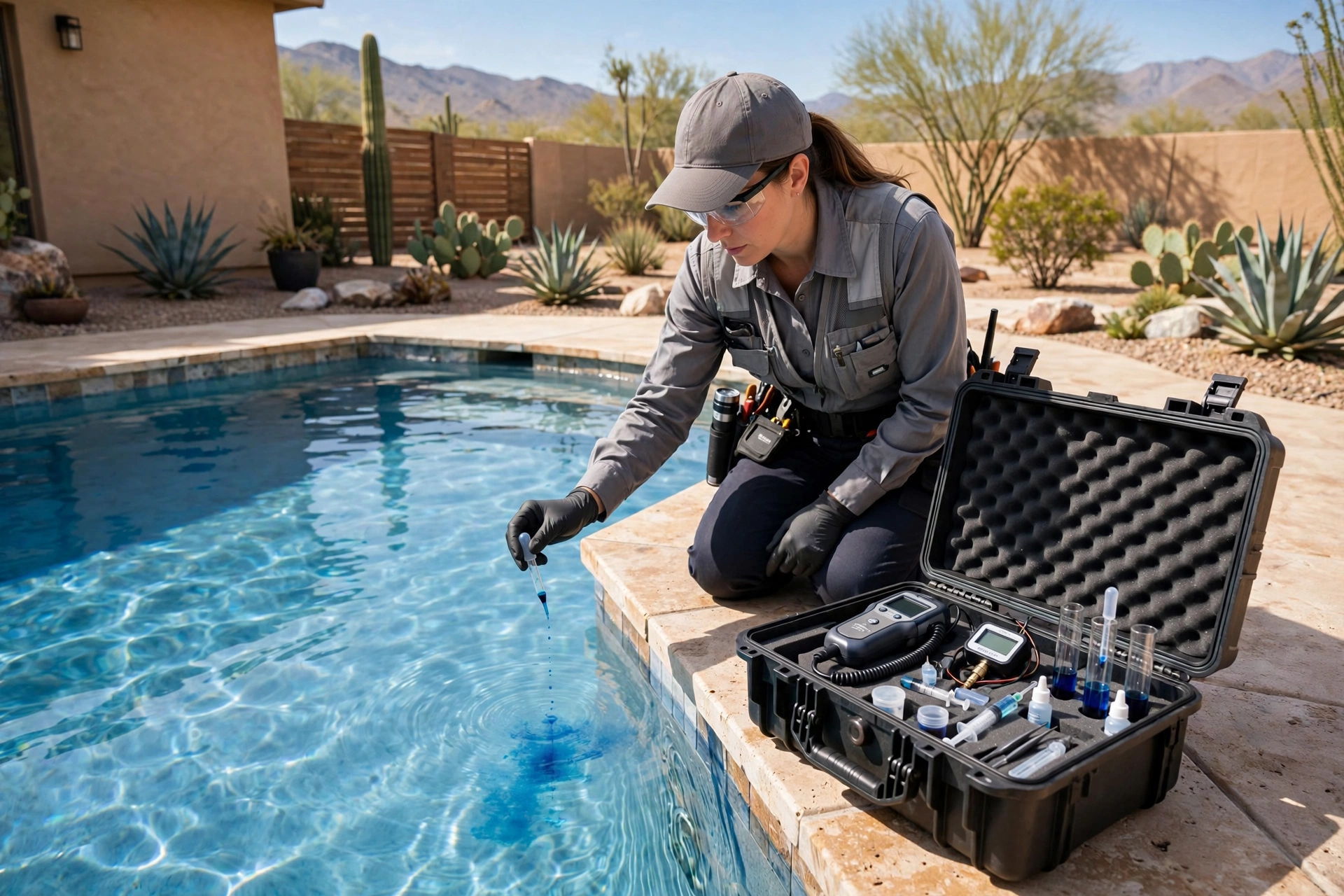
Once the bucket test confirms a leak, professional detection takes over: pressure testing isolates which plumbing circuit fails, dye testing pinpoints shell and fitting leaks, and acoustic or tracer-gas methods locate underground breaks. The goal is the same as indoors — find the exact point so repair is targeted, not exploratory.
Common Questions
How do I know if my pool is leaking or evaporating?
The bucket test: a bucket on the pool step, matched levels, 24 hours. Equal drop in both = evaporation. Pool drops more = leak. It's simple physics and it's definitive.
What is the bucket test for pool leaks?
A DIY diagnostic where a water-filled bucket sits on the pool step for 24 hours. Since the bucket experiences the same evaporation but no plumbing, any extra loss in the pool must be a leak.
How much water loss is normal for a pool?
Up to roughly a quarter-inch per day in hot, dry, windy weather. Consistently more indicates a leak worth investigating.
Where do swimming pools leak most often?
Skimmers, return fittings, and light niches on the shell side; suction and return lines underground; pump seals and unions at the equipment pad.
Does a pool leak get worse with the pump on or off?
It depends on the leak's location: pressure-side leaks (returns) worsen with the pump running; suction-side and shell leaks may show more with it off. Testing both ways is itself a diagnostic clue.
Suspect a Leak? Don't Guess — Detect.
Every day a hidden leak runs costs you water and risks damage. Call now for professional, non-invasive leak detection in Santa Fe, NM — open 24/7.